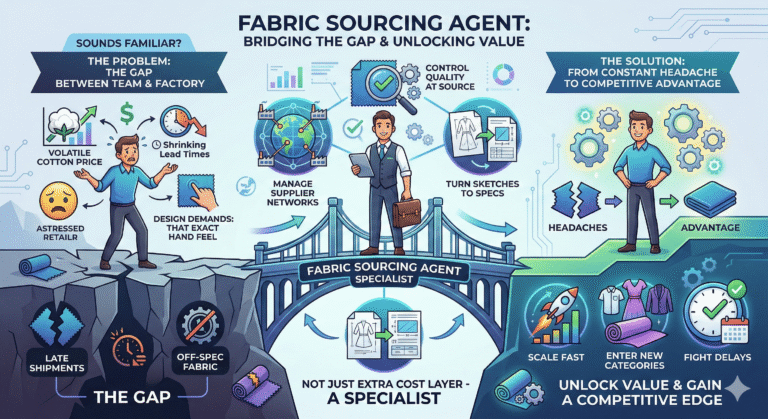
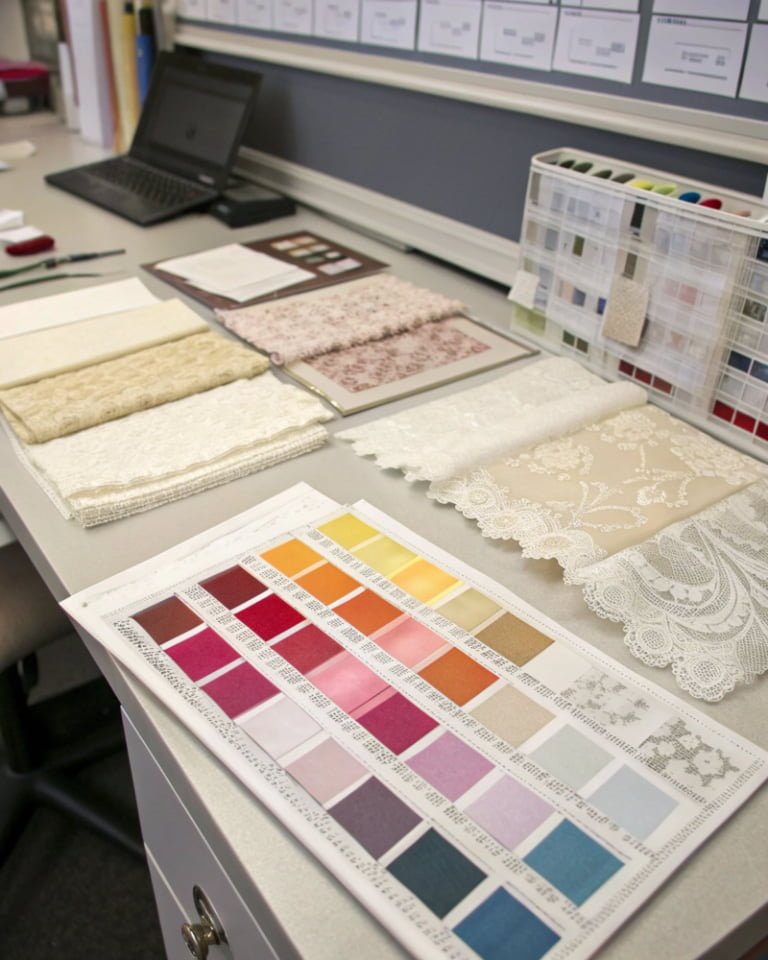
You have a beautiful bridal design. You know exactly what lace you want, the weight of the tulle, the drape of the satin. But when you search for suppliers, you hit a wall—language barriers, MOQs in the thousands, factories that ghost you after the first email.
I have watched dozens of indie designers waste months (and money) trying to navigate China's supply chain alone.
A sourcing agent is your eyes, ears, and advocate in the factory—bridging the gap between your creative vision and the production floor. For bridal designers, a good sourcing agent handles fabric procurement, supplier vetting, quality control, and logistics so you can focus on design, not damage control. They do not just "find stuff"; they protect your IP, negotiate terms, spot red flags before you pay a deposit, and ensure your sample does not arrive with the wrong lace or three shades off.
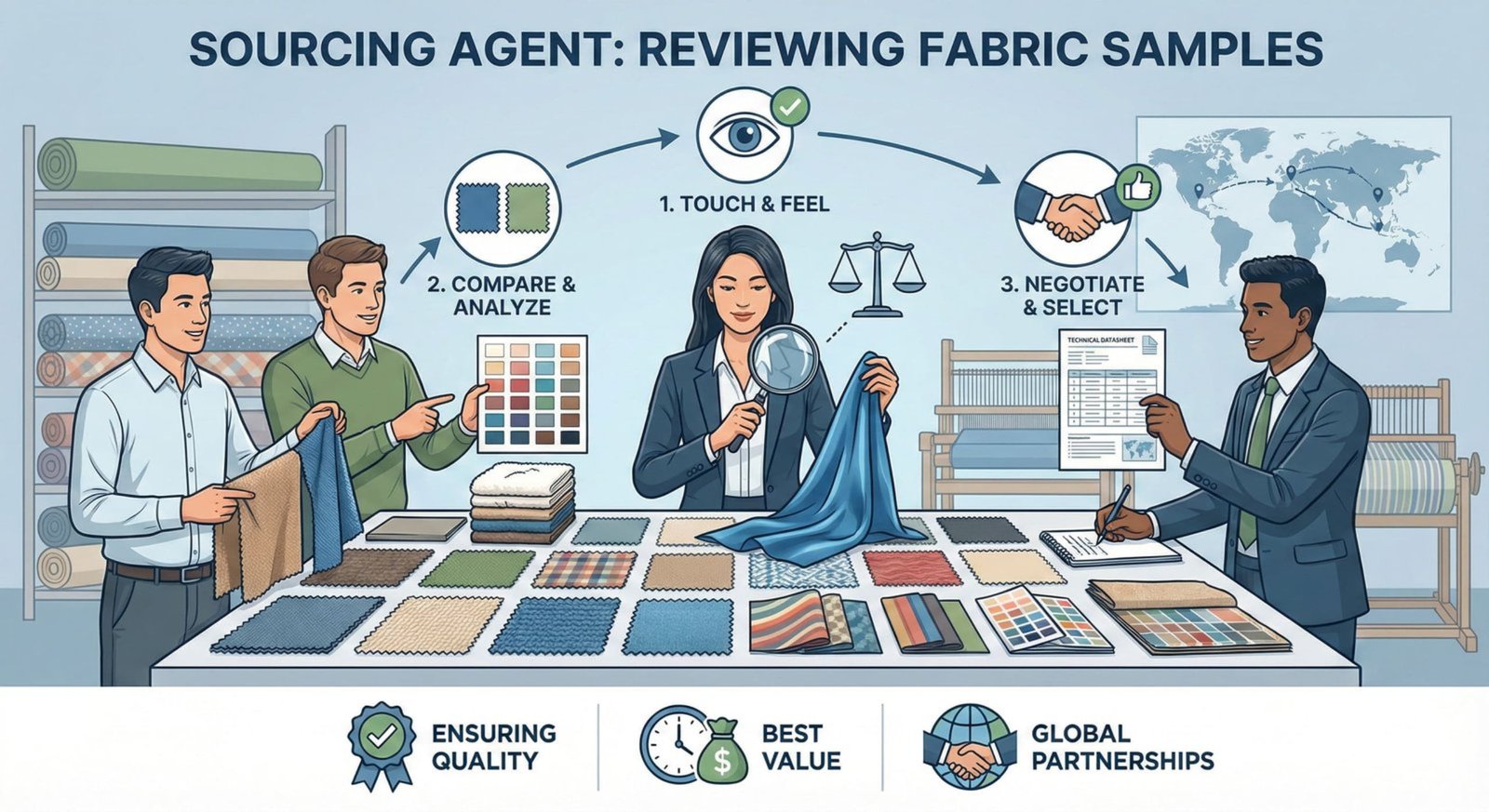
If you have ever lost sleep wondering whether your bulk order will match your approved sample—or whether your factory even understood your tech pack—you already know why a sourcing agent is not a luxury.
It is insurance.
- 🎯 What Does a Sourcing Agent Actually Do?
- 👰 Why Bridal Designers Need a Specialist Sourcing Agent
- 💰 How a Sourcing Agent Saves You Money (Yes, Really)
- 🔎 What to Look for When Hiring a Sourcing Agent
- 🤔 Sourcing Agent vs Buying Direct: When Does Each Make Sense?
- ⚠️ Common Sourcing Agent Mistakes (and How to Avoid Them)
- 🛠️ How I Work With Indie Bridal Designers (Real Process)
- ❓ Frequently Asked Questions
- 🎯 Conclusion
- 💌 About Kimmy
🎯 What Does a Sourcing Agent Actually Do?
People think a sourcing agent is just someone who "finds factories."
That is like saying a wedding planner just "books venues."
The real work is risk management, translation (not just language—technical and cultural), and quality assurance.
💡 Key Insight:
A sourcing agent wears many hats: procurement specialist, negotiator, QC inspector, logistics coordinator, and—when things go sideways—your problem solver.
For bridal and fashion designers, this means someone who understands fabric hand, construction techniques, and finish standards—not just unit prices.
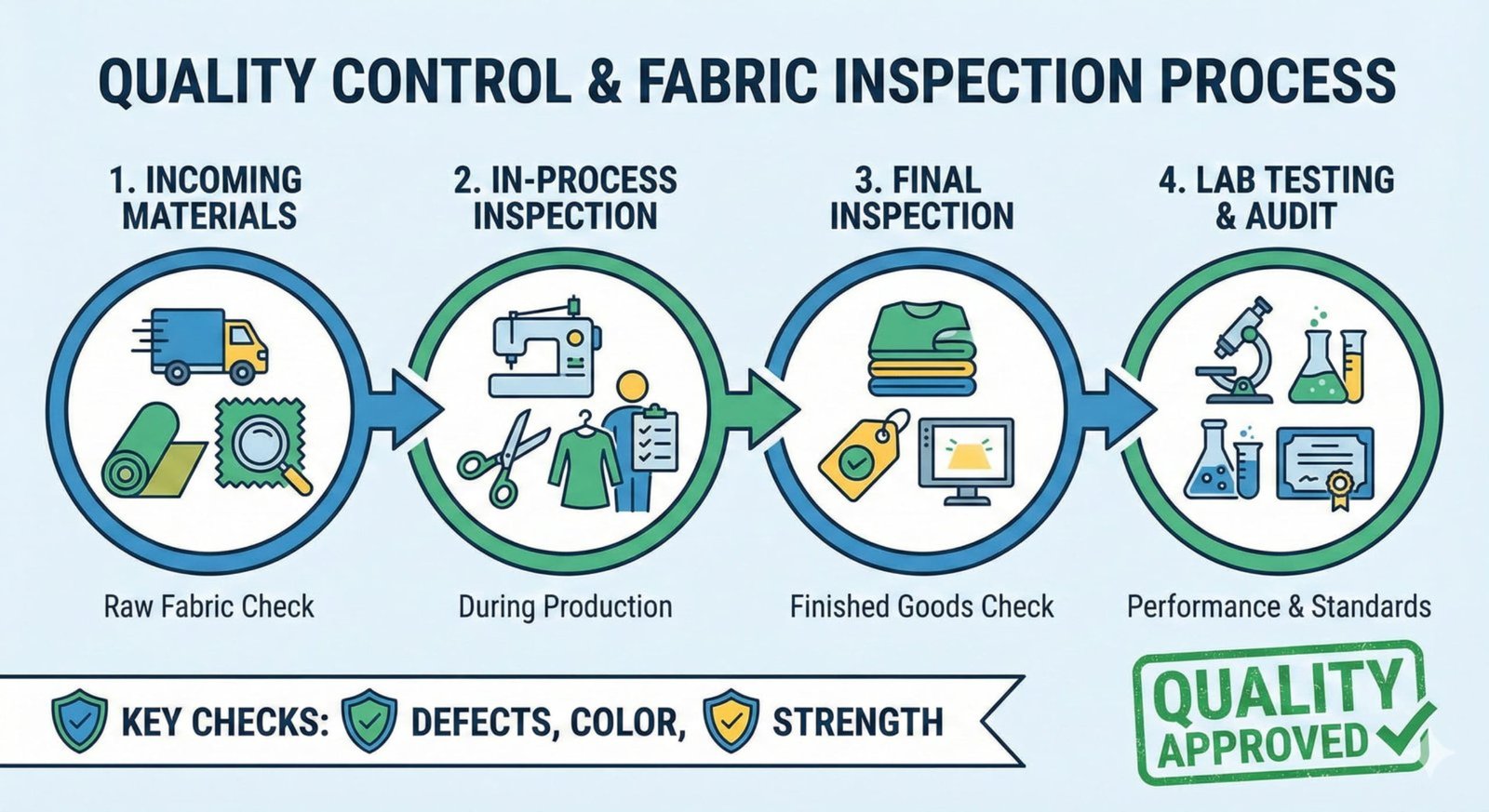
📋 The Core Responsibilities You Can Outsource
Here is what I do for my clients, broken down by project phase.
Pre-production: 🔍
✅ Supplier identification and vetting — I do not send you a list of random Alibaba links. I visit factories, check certifications, review past work, and assess whether they can handle your volume and timeline.
✅ Material sourcing — Need Chantilly lace with no MOQ? I know which mills hold stock and which require 300-meter dye lots. I pull swatches, compare hand and price, and send you options—not guesses.
✅ Sampling coordination — I translate your tech pack (or help you write one if you do not have a pattern maker), place the sample order, follow up weekly, and inspect before shipping. If the sample is wrong, I push for a redo before you see it.
Production: 🏭
✅ Order management — I issue POs, track deposits, monitor production schedules, and send you progress photos. If the factory is behind, I know before your ship date is at risk.
✅ Quality control — I conduct in-process and pre-shipment inspections using AQL standards (or your house rules). I check fabric grade, stitching, measurements, finishing, and packaging. If defects exceed tolerance, I negotiate rework or discount before goods leave China.
✅ Logistics — I arrange shipping (air or sea), handle customs docs, and work with your freight forwarder. I do not do customs brokerage myself, but I make sure paperwork is clean so your broker does not call with problems.
Post-delivery (sometimes): 📦
- ✅ Claims and corrections — If something arrives wrong, I go back to the factory with photos and data, not emotion. I have leverage because I am local, I speak the language, and I will use them again (or not).
💼 Ready to stop chasing factories at 2 AM?
Learn more about our full sourcing and production services →
👰 Why Bridal Designers Need a Specialist Sourcing Agent
Bridal is not casualwear.
A misaligned appliqué, a shade-off lace, or a bodice that is 2 cm too tight is not "close enough."
Brides notice. Your reputation depends on precision and consistency.
I have spent over 20 years in the bridal supply chain. I have worked with names like David's Bridal and Vera Wang, so I know what "big brand standards" look like.
But I serve small designers—the ones who need that same quality but order 5 to 20 pieces, not 5,000.
✨ Here is what that experience means for you:
| Challenge | How I Help |
|---|---|
| 🗣️ "I said soft English net but got stiff polyester tulle" | I speak "bridal." When you say "soft English net" or "3D floral appliqué," I know the construction, the mill sources, and the common defects. |
| 📉 "Factory laughed at my 10-piece order" | I work with workshops and specialist suppliers who do short runs—because their business model is agility, not volume. |
| 🧪 "My sample fit perfectly, bulk was 2 sizes small" | I test every batch for shrinkage, colorfastness, composition. You do not get surprised by size difference between sample and bulk. |
🔬 Want to see how we test and QC every order?
Explore our quality and testing process →
If you have tried to explain "cathedral-length veil with hand-appliquéd Alençon lace motifs" to a factory over WeChat and received a photo of machine-stitched polyester trim, you understand why specialist beats "generalist" every time.
💰 How a Sourcing Agent Saves You Money (Yes, Really)
I hear this a lot:
"I cannot afford an agent; I will just buy direct from the factory."
I get it—when cash is tight, every line item hurts.
But here is the math that surprises people.
🚨 The Hidden Costs of Going Direct
| Hidden Cost | Real Example |
|---|---|
| ❌ Mistakes and rework | A sample that is wrong costs you the sample fee plus delay. One bad bulk order can cost more than a year of agent fees. |
| ❌ Overpaying for materials | Last month I saved a client $4/meter on lace (300-meter order) by asking for second-tier grade. That is $1,200 saved—my retainer paid twice over. |
| ❌ Shipping and logistics errors | Wrong Harmonized Code? Missing invoice details? I have seen $200 of paperwork mistakes cost $800 in demurrage. |
| ❌ Your time | Every hour you spend on supplier emails is an hour you are not designing the next collection or closing a bride. |
✅ How an Agent Pays for Itself
A good sourcing agent more than covers their fee through:
- 💵 Better prices (because they know market rates and have relationships)
- 🛡️ Fewer mistakes (because they catch problems early)
- ⚡ Faster turnarounds (because they follow up in real time, in the local language)
- ⏰ Your time back (so you can grow your business instead of managing WhatsApp threads)
🚀 Ready to scale without the headaches?
See our small-batch production service and typical lead times →
🔎 What to Look for When Hiring a Sourcing Agent
Not all sourcing agents are created equal.
Some are just middlemen marking up Alibaba links. Others have deep category expertise and factory relationships.
Here is how to tell the difference.
✅ 1. Specialist vs Generalist
Ask: "What product categories do you focus on?"
| 🚩 Red Flag | ✅ Green Flag |
|---|---|
| "We do everything—electronics, fashion, home goods..." | "I focus exclusively on bridal fabric, lace, and gown production." |
A specialist in bridal already knows the key suppliers, typical lead times, common defects, and testing standards. They have pattern-making and garment-construction knowledge, not just procurement skills.
💎 My focus:
I work exclusively on bridal fabric, lace, accessories, and small-batch gown production. That is it. No electronics. No pet toys. This narrow focus means I can answer technical questions on the spot and catch construction errors your factory might miss (or hide).
✅ 2. Transparent Fee Structure
Some agents work on commission (a percentage paid by the factory—or hidden in the quote). Others charge a retainer or project fee.
I prefer transparent project fees or monthly retainers because:
- ✔️ You know exactly what you are paying
- ✔️ My incentive is your success, not inflating the order value
- ✔️ There is no conflict when I negotiate your price down
Ask upfront: "How do you charge, and who pays you?"
If they dodge the question, that is a 🚩 red flag.
✅ 3. In-Person QC and Factory Visits
Anyone can forward factory photos.
A real sourcing agent goes to the factory, inspects in process and before shipment, and sends you the photos with measurements and notes.
Ask: "Will you visit the factory for my order, and will I get an inspection report?"
🏭 My approach:
I live in Shenzhen and my workshop is in the Guangdong/Jiangsu bridal belt. I can be on a factory floor in two hours. For critical orders, I am there during cutting and before packing.
📸 Want to see our process in action?
Read about our step-by-step process and timeline →
✅ 4. Communication Style and Availability
Time zones are real.
If your agent is in China and you are in New York, you need overlap hours or a system (daily summary emails, shared project tracker).
Ask: "What is your typical response time, and how do you handle urgent issues?"
📱 My commitment:
I keep WhatsApp, email, and WeChat open and aim to reply within 12 hours on weekdays (often faster). For urgent QC issues, I send photos and voice notes same day.
✅ 5. References and Portfolio
Ask to see past projects similar to yours (fabric type, order size, construction complexity).
Ask for references—especially from designers at your stage (startup or small batch).
A good agent will happily connect you with a current client (with that client's permission).
🎨 Curious about the fabrics we source?
Browse our fabric and lace collections →
🤔 Sourcing Agent vs Buying Direct: When Does Each Make Sense?
Buying direct from a factory works if:
| ✅ You have this | 📌 Why it matters |
|---|---|
| Large, repeat orders (500+ pieces per style) | Factory prioritizes you |
| Mandarin fluency + cultural knowledge | Clear communication, no misunderstandings |
| Ability to travel to China regularly | In-person QC and relationship building |
| Technical team (pattern maker, QC manager) | Can write specs, approve samples, catch errors |
Hiring a sourcing agent makes sense if:
| ✅ You have this | 📌 Why it matters |
|---|---|
| Indie designer or small brand (under 100 pieces per style) | Factories ignore small orders; agents have workshop networks |
| No in-house technical or QC staff | Agent fills the gap |
| Based outside Asia | Agent is your local eyes and ears |
| Value speed and flexibility | Test styles without huge MOQs |
| Need pattern development or sampling help | Not just bulk production |
💡 My sweet spot:
I work with designers doing $50K–$500K annual revenue—beyond Etsy-only, but not yet at "own an office in China" scale. At that stage, an agent is your scalable production team without the overhead of hiring full-time staff.
🎯 Ready to bring your designs to life without the production stress?
Learn how we support independent bridal designers with pattern making and sampling →
⚠️ Common Sourcing Agent Mistakes (and How to Avoid Them)
Even when you hire an agent, things can go wrong if you do not set clear expectations.
Here are pitfalls I have seen—and how I avoid them with clients.
❌ Mistake 1: Assuming the Agent Understands Your Brand Standards
Problem: You show a reference photo and say "like this." The agent finds a factory that makes "similar" dresses. But "similar" is not the same as your quality, hand, and finishing standards.
Solution:
Give your agent a physical reference sample (buy a competitor's dress, or your own past production) and a written quality spec:
- Stitching per inch
- Seam finish
- Acceptable defects
- Hand/drape
📦 What I do:
I ask new clients to send me a "gold standard" sample so I can match it (or explain why we need to adjust expectations for the budget).
❌ Mistake 2: Not Testing Fabric Before Bulk
Problem: You approve a fabric swatch. The agent orders bulk. Bulk arrives and the hand is different, or it shrinks 5% instead of 3%.
Solution:
For any new fabric or supplier, order a test length (e.g., 10–20 meters), pre-shrink, wash, and test colorfastness before committing to bulk.
🧪 What I do:
I do this automatically for first-time fabrics—and I re-test each batch because dye lots vary.
🔬 See how we handle fabric sourcing and testing:
Explore our fabric and lace sourcing service →
❌ Mistake 3: No Written Agreement on Defect Tolerance
Problem: Bulk arrives with minor defects (e.g., a few skipped stitches per dress). You want to reject it; the factory says it is within "normal tolerance." The agent is stuck in the middle.
Solution:
Before production, agree (in writing) on AQL or your own defect limits:
| Defect Type | Tolerance |
|---|---|
| Critical (e.g., wrong lace motif) | 0% |
| Major (e.g., visible stitching error) | 2.5% |
| Minor (e.g., tiny thread tail) | 4% |
📋 What I do:
I put this in the PO so everyone is aligned before cutting.
❌ Mistake 4: Waiting Until the Last Minute to Raise Concerns
Problem: You see progress photos that look "off" but think "maybe it will look better in person." By the time goods arrive, it is too late to fix.
Solution:
Speak up immediately.
A good agent wants to hear your concerns during production, not after.
📸 What I do:
I send progress photos at key stages (cutting, assembly, finishing) and ask clients to approve before moving forward. If something is wrong, we fix it then—not when the dress is packed.
🛠️ How I Work With Indie Bridal Designers (Real Process)
Let me walk you through a typical project so you can see what working with a sourcing agent actually looks like.
Step 1: Consultation and Scope (Week 0) 💬
You send me sketches, reference photos, or a mood board. We talk through:
| Question | Why It Matters |
|---|---|
| Fabric and trim | What lace, what base fabric, any special finishes (beading, 3D appliqué)? |
| Construction | Boning, lining, closures (zipper, buttons, corset lacing)? |
| Quantity and timeline | How many pieces, when do you need them? |
| Budget | Rough target per piece (so I can recommend realistic fabric and factory options) |
If you do not have a tech pack, I help you build one (or I connect you with a pattern maker in my network).
If you already have patterns and samples, we review them for production-readiness (e.g., seam allowances, grade rules, construction notes in Chinese).
📖 Want to see the full timeline?
Read more about our process here →
Step 2: Sourcing and Sampling (Weeks 1–4) 🧵
Fabric:
- I pull swatches from my supplier network (I keep a swatch library of premium lace, tulle, and silk)
- I send you photos and physical swatches (if time allows)
- You pick, I order test yardage, we wash and test before committing to bulk
Factory matching:
- I shortlist 2–3 factories based on your construction complexity and volume
- I send you their past work and pricing
- You pick one (or I recommend based on lead time and quality)
Sample order:
- I translate your tech pack
- I issue the sample PO and follow up weekly
- When the sample is ready, I inspect it in person (measurements, finishing, fabric hand)
- Then I ship to you
- If it needs changes, I coordinate revisions before bulk
Step 3: Bulk Production and QC (Weeks 5–10) 🏭
| Stage | What I Do |
|---|---|
| PO and deposit | Once you approve the sample, I issue a bulk PO with your agreed spec and defect tolerance. You pay me, I pay the factory—this gives you an extra layer of protection. |
| In-process inspection | I visit during cutting and mid-assembly to catch issues early (e.g., fabric flaw, pattern misalignment). |
| Pre-shipment inspection | Before packing, I check every piece (or a statistical sample if order is large) against the approved sample and spec. I measure, photograph, and send you a report. If defects exceed tolerance, I negotiate rework or discount. |
| Shipping | I arrange freight (you choose air or sea based on urgency and budget), prepare customs docs, and send you tracking. |
Step 4: Delivery and Follow-Up (Week 11+) 📦
Goods arrive. You inspect.
If there is a problem I missed, I go back to the factory with data (photos, measurements) and push for a solution (remake, credit, or discount on next order).
My goal is that you never have a problem, but if you do, I handle it—not you.
👗 Looking for ready-to-order bridal accessories?
Explore our collection including veils, sleeves, and toppers →
❓ Frequently Asked Questions
What is the difference between a sourcing agent and a trading company?
A sourcing agent works for you (the buyer) and is paid by you—either a flat fee, retainer, or percentage.
A trading company buys from the factory and resells to you at a markup; you are their customer, not their client.
| Sourcing Agent | Trading Company |
|---|---|
| Loyalty to you | Loyalty to their margin |
| Transparent fees | Markup hidden in price |
| You control supplier relationships | They control supplier access |
For transparency and control, I recommend an agent.
How much does a sourcing agent cost?
Fees vary by service and order size. Common models:
| Fee Model | Typical Range |
|---|---|
| Percentage of order value | 5–10% |
| Flat project fee (per style for sampling + production) | $500–$2,000 |
| Monthly retainer (ongoing support) | $1,000–$3,000/month |
💡 My approach:
I use project fees or retainers because they align my incentive with your success, not order inflation. Ask any agent for a written fee structure before you start.
Do I still need to visit the factory if I hire a sourcing agent?
Not necessarily—but it helps.
A good agent handles day-to-day QC and communication so you do not need to be there every week.
But if you are launching a new style or scaling up, I recommend one visit to meet the factory, walk the floor, and build rapport.
After that, your agent can manage remotely.
📹 Can't travel?
I offer virtual factory tours (video call walkthrough) for clients who cannot travel.
Can a sourcing agent help with fabric and trim sourcing, not just production?
Yes—that is often where agents add the most value.
Finding the right lace or tulle with no MOQ is harder than finding a sewing factory.
I spend as much time on fabric and trim sourcing as I do on production coordination.
🧵 Need help finding the perfect lace or tulle?
See our fabric and lace sourcing service for details →
What if my order is too small (under 10 pieces)?
Many agents and factories will not touch orders under 50 or 100 pieces.
I specialize in small batch (5–20 pieces) because I work with agile workshops, not big factories.
There is a cost premium for small runs (setup and pattern time do not scale), but it is doable.
🎯 Starting small but want big-brand quality?
Learn more about small-batch production here →
🎯 Conclusion
A sourcing agent is not just a "finder"—they are your risk manager, quality gatekeeper, and advocate on the factory floor, especially critical for bridal designers who cannot afford shade mismatches, construction errors, or IP theft.
The right agent saves you money (through better pricing, fewer mistakes, and your time back), protects your brand (through in-person QC and transparent communication), and scales with you (from 5-piece samples to 50-piece collections).
Look for a specialist who knows your category, offers transparent fees, conducts in-person QC, and can show you references and past work.
If you are an indie bridal designer doing $50K–$500K in revenue and you are tired of factory miscommunication, hidden costs, and sleepless nights before shipments arrive, a sourcing agent is not a luxury—it is your production insurance and growth partner.
💌 About Kimmy
I am Kimmy, founder and sourcing partner at BridalSourcing.com.
I have over 20 years in the bridal supply chain, with experience serving brands like David's Bridal and Vera Wang—but I focus on indie designers and small brands who need big-brand quality without big-brand minimums.
Based in Shenzhen, China (heart of the global bridal supply chain), I help designers source premium lace and fabric, develop patterns and samples, and manage small-batch production (5–20 pieces) with rigorous QC and transparent pricing.
If you are ready to stop worrying about whether your bulk will match your sample, let's talk.
📞 Let's Work Together
| Contact | Link |
|---|---|
| kimmy@bridalsourcing.com | |
| +86 181 2218 7212 | |
| linkedin.com/in/bridalsourcing | |
| @bridal_sourcing |
🔗 Explore More
🚀 Ready to bring your bridal designs to life?
Get in touch today and let's discuss your next collection.
Last updated: February 2026. Lead times, pricing, and processes may vary by project scope and season.